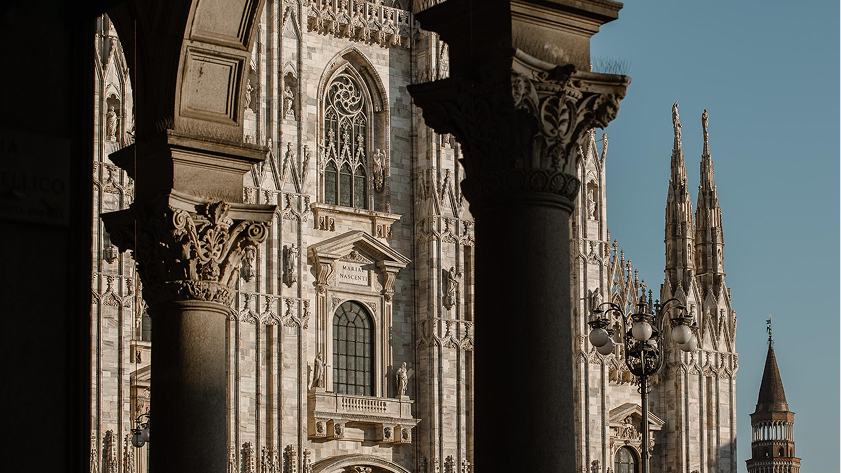
The second-most populous city in the country moves with purpose: trains glide north toward Switzerland, factories hum past the ring road, and a full calendar of shows, matches, and exhibitions leaves little room for idleness.
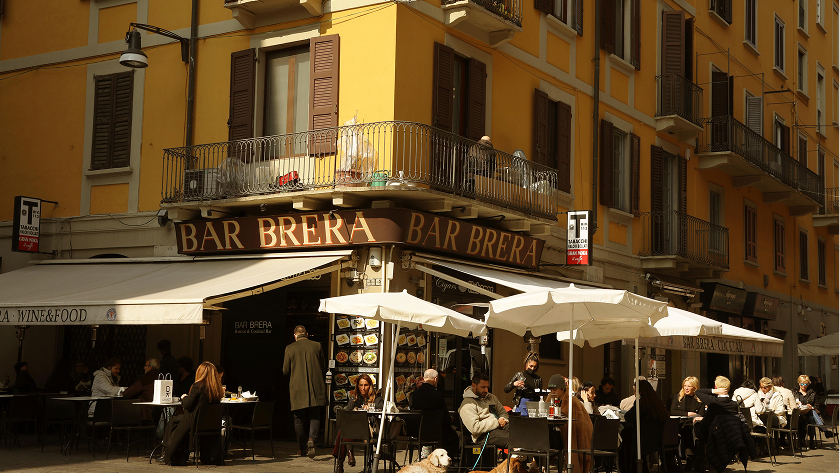
But even a city built on momentum needs its own pause. In Milan, that moment is ‘aperidinner’– a ritual that begins with a drink and quietly turns into dinner. Between six and eight, bars fill with colleagues shedding the day’s pace, conversations growing louder as plates multiply. The same people who started the morning with a quick espresso now linger over olives, prosciutto, and Negroni Sbagliato, and somehow it feels just as productive.
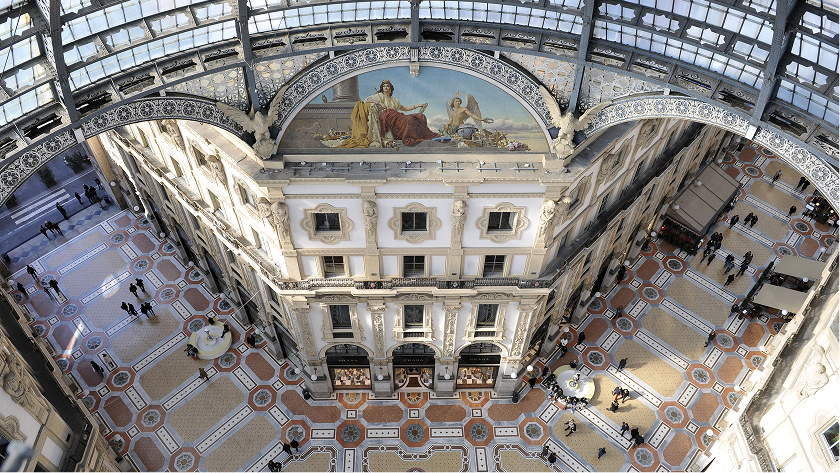
Walk through Milan and the city reveals its second self. In Brera, the old artists’ quarter north of the centre, life moves at a painter’s pace. The smell of varnish still hangs in the courtyards, and galleries glow behind tall wooden doors that have barely changed in half a century. Down south in Navigli, everything gets louder. The canals that once carried marble for the Duomo now reflect pink neon and the clink of glasses. This is Milan’s social engine – part bohemian, part after-work ritual – where jazz, laughter, and the hum of conversation linger long after midnight.
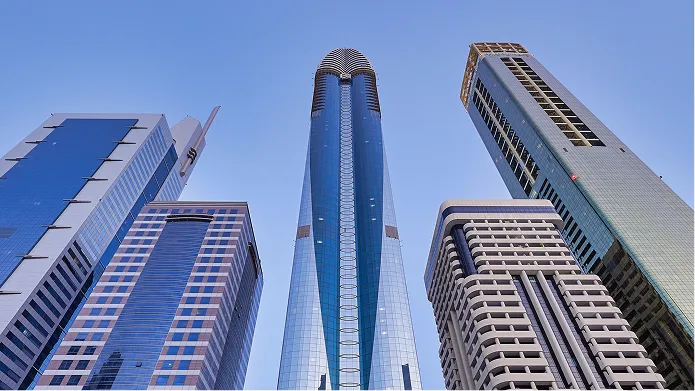
To the north, Porta Nuova rises like a declaration. Once railyards and empty lots, it’s now all mirrored towers, rooftop terraces, and the Bosco Verticale, those tree-lined skyscrapers that turned Milan into a global model for urban greenery. Right beside it, Isola keeps the tone grounded with its local markets, bakeries, and art collectives. And across town, the Quadrilatero d’Oro plays a different rhythm altogether – the quiet choreography of luxury. Between Via Montenapoleone and Via della Spiga, shop windows become stages and even the air smells faintly of leather and precision.

Milan often feels like it belongs more to Europe than to Italy. Many southerners call it cold, expensive, even pretentious – a place where people walk too fast and don’t talk enough. The streets are clean but not picturesque, the architecture efficient rather than romantic, and the sky, for much of the year, the colour of aluminium. Yet that detachment is part of its strength. Milan was rebuilt after the war as an industrial engine, not a museum, and it learned to value discipline over charm. Where Florence preserves beauty, Milan produces it – on runways, in furniture studios, and in the quiet precision of its service design.
Real estate follows the same logic. In the historic core – Brera, the Duomo ring, and the Quadrilatero d’Oro – prices reach €10,000 to €12,000 per square meter, reflecting scarcity and craftsmanship. Beyond the center, values stabilise around €5,000 to €6,000, while rents average €22 per square meter per month. Demand is strongest in regeneration zones like Porta Romana and Scalo Farini, where industrial land is turning into mixed-use neighbourhoods under strict sustainability rules. Luxury moves fast, mid-range stock stays stable, and the city’s northward pull toward Switzerland keeps international investors circling.
For visitors, Milan is equally magnetic: fashion weeks, design fairs, and football matches turn the city into a year-round stage, while the Duomo, La Scala, Leonardo’s Last Supper, and the canals of Navigli remind tourists that industry and culture can thrive side by side.
Milan moves too fast to charm everyone. The streets work, the trams arrive, the buildings stay useful. Real estate follows the same logic of measured progress – values rise because the city does. And somewhere between the morning espresso and the evening soirée, you understand why: Milan never slows down – it simply knows when to switch gears.

.svg)


.jpg)



.jpg)


.jpg)

.webp)
.webp)


.webp)
.webp)

.webp)

_11zon.jpeg)
.jpg)
.jpeg)
.webp)

.jpg)


.webp)


.webp)
.webp)


.webp)
.webp)
%20(2).webp)
.webp)
.webp)
.webp)

.webp)
.webp)
.webp)
.webp)
.webp)


.png)
.png)
