.jpg)
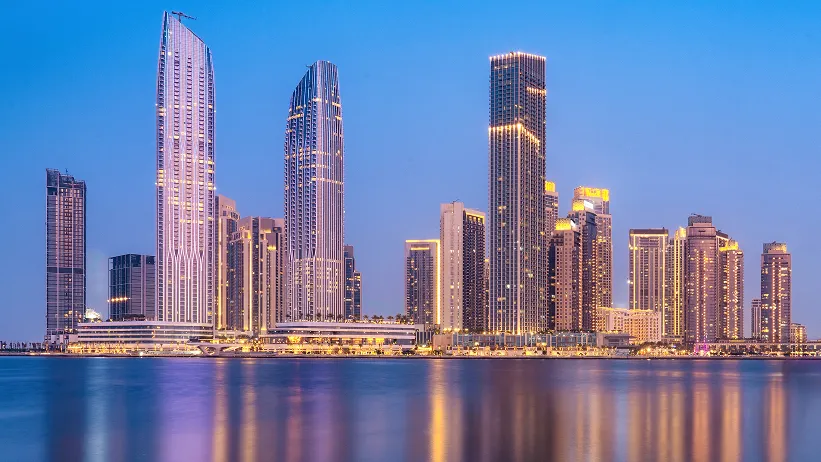
In the early 2000s, Downtown Dubai was still sand and sketches: an empty canvas where the emirate planned to build a modern district from the ground up. For such a place to come alive, it needed an anchor big enough to draw people to a neighbourhood that did not yet exist. Dubai Mall became that anchor – one of the first structures to rise, with Burj Khalifa and the rest of Downtown shaped around it. The strategy was straightforward: build the destination first, and the city will follow.
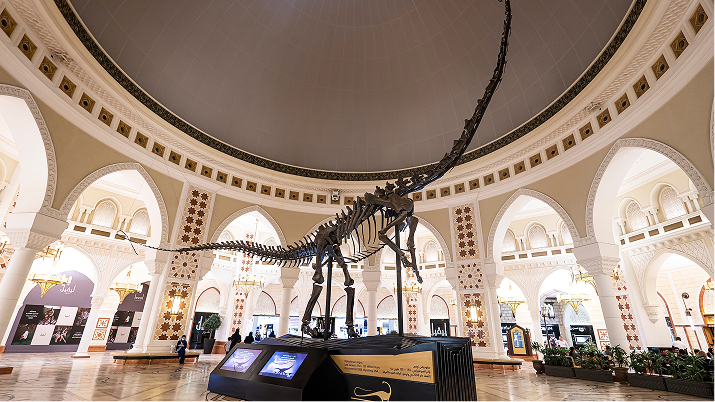
Inside, that ambition is visible at every turn. The aquarium’s acrylic panel, once the largest of its kind and certified by Guinness World Records, spans an entire atrium. Behind it lives a collection of more than 150 marine species, including one of the world’s largest gatherings of sand tiger sharks. Nearby stands the Dubai Dino, a 155-million-year-old Diplodocus longus excavated in Wyoming, with 90% of its bones original. Few natural history museums display a specimen this complete, sitting casually in the middle of a retail concourse. Just meters away, an Olympic-sized ice rink holds hockey games in a city where summer temperatures casually push past forty degrees.
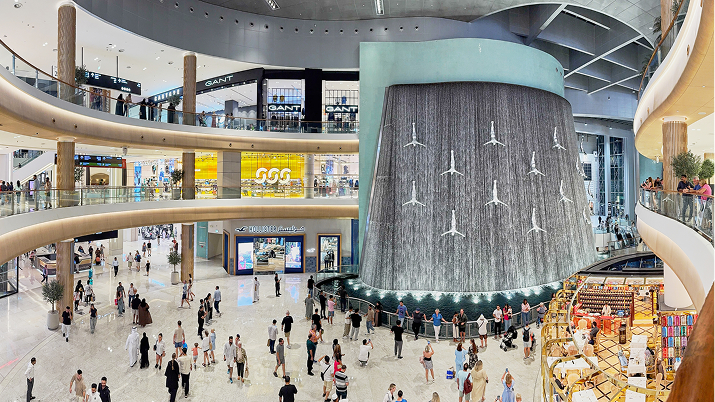
Other zones read like different neighbourhoods within the same mini-city. Fashion Avenue, an expansion dedicated to global luxury, is finished in white Statuario and Statuarietto marble over tens of thousands of square meters, with flagship boutiques designed almost as individual pavilions. Between these areas, the indoor waterfall with its diving figures pays tribute to the UAE’s pearl-diving past, echoing an economy that existed long before shopping malls and skyscrapers.
Keeping all of this running requires infrastructure closer to an airport than a typical retail centre. Beneath the public levels, a network of loading bays and back-of-house corridors keeps stock, staff moving without touching the main walkways. Cooling systems are engineered to handle both the desert climate and the dense indoor crowds. The multi-storey car parks absorb daily traffic on a scale that would normally belong to a transport hub. Even Burj Khalifa plugs into this system: entry to the At the Top observation decks begins on the lower ground floor of Dubai Mall, so every visitor to the world’s tallest tower passes through the mall first. For anyone crossing it from end to end, electric carts – the unofficial ‘mall taxis’ – quietly take on the role of internal public transport.
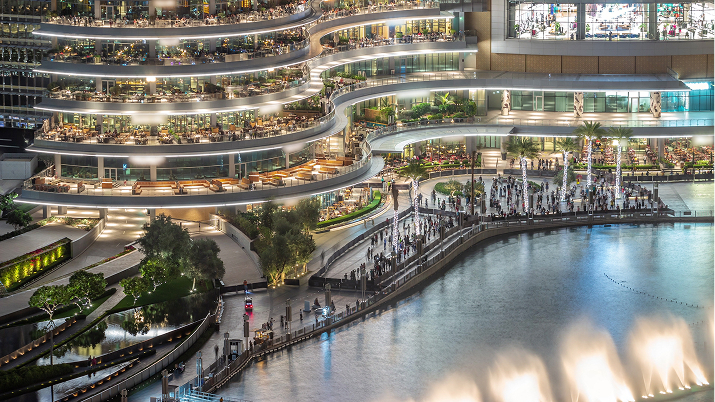
Outside, the Dubai Fountain turns the waterfront into a nightly arena. Its jets shoot water up to 140 meters – higher than many buildings – and the shows draw such dense crowds that the promenade functions as an outdoor forecourt to the mall. On weekends, more than twenty thousand people can gather around for a single evening of performances, and the pedestrian routes from the viewing terraces funnel directly into the mall’s entrances. The result is a continuous loop of movement in which the fountain and the mall operate as one system, each feeding the other’s energy.
What ultimately defines Dubai Mall, though, is the way it compresses Dubai’s everyday rhythm into a single walkable space. Families heading to the ice rink, residents meeting for coffee, tourists on their way to Burj Khalifa, teenagers lingering by the aquarium – all of them share the same corridors, escalators and atriums. In a city where most journeys happen by car, Dubai Mall functions as an indoor crossroads: a place where different versions of Dubai brush past one another in public, hour after hour, day after day.

.svg)


.jpg)



.jpg)


.jpg)

.webp)
.webp)


.webp)
.webp)

.webp)

_11zon.jpeg)
.jpg)
.jpeg)
.webp)

.jpg)


.webp)


.webp)
.webp)


.webp)
.webp)
%20(2).webp)
.webp)
.webp)
.webp)

.webp)
.webp)
.webp)
.webp)

.png)
.png)
