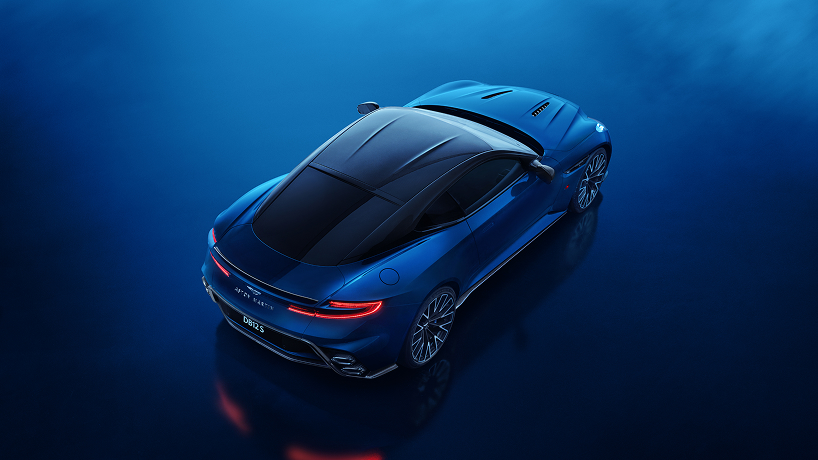
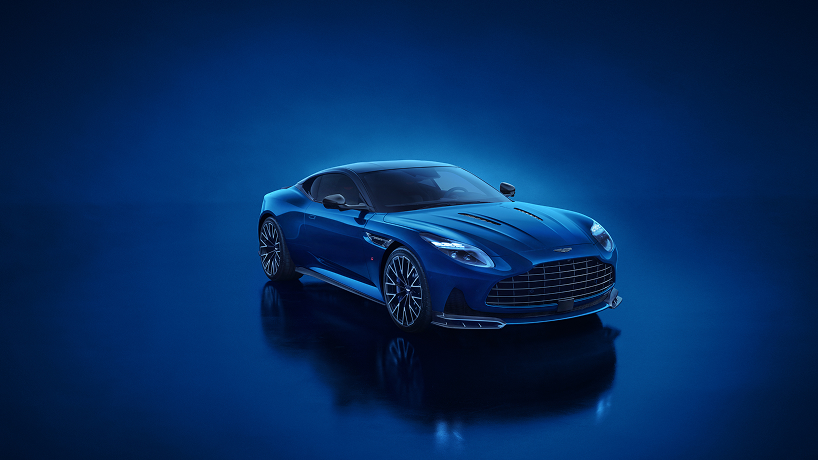
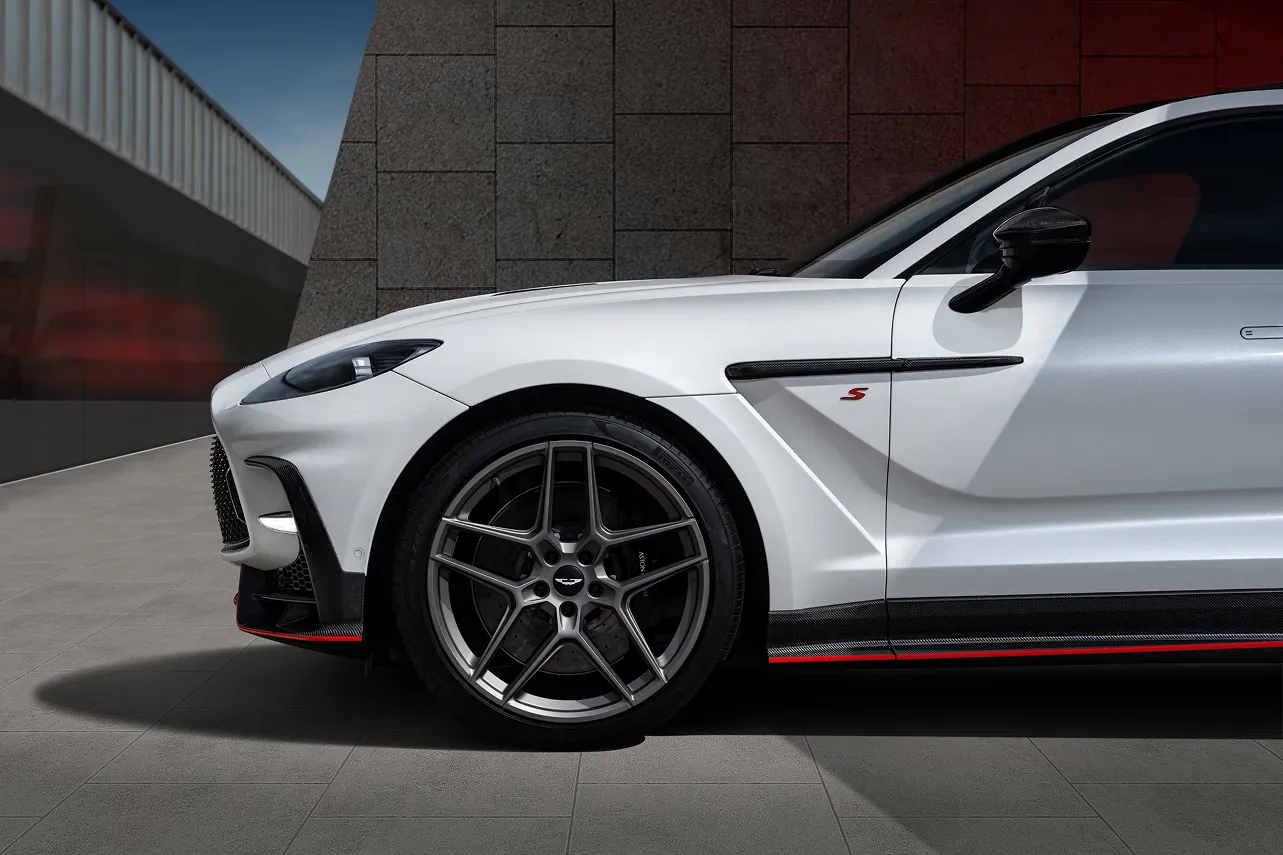
Changes to the bodywork reveal themselves gradually, the way good design usually does. A lower front splitter sets the mood, pulling the nose closer to the road. Bonnet louvres break the smooth surface just enough to let the V8 clear its heat. Further back, a spoiler and diffuser sit within the shape rather than on top of it, and stacked quad exhaust pipes look as if they’ve always belonged there. Small ‘S’ badges keep the manners intact, adding a touch of red enamel.
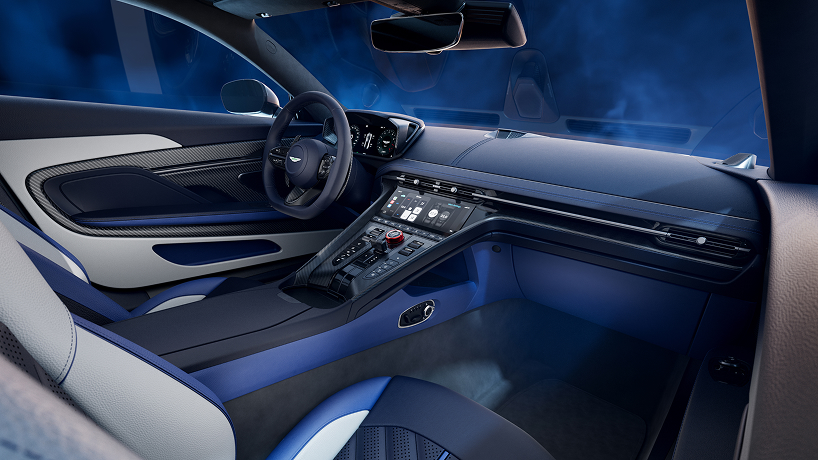
DB12 S keeps a familiar feeling in the cabin.The seats are now able to move in sixteen directions, which makes finding a comfortable position oddly satisfying. Materials feel richer as well, especially in S-specific layouts that mix leather with Alcantara. A herringbone pattern across the seats adds a tailored note without drifting into theatrics. And in the middle sits a red drive-mode controller, the only thing here that looks as if it has somewhere to be.
The biggest shift comes from the 4.0-liter twin-turbo V8, now at 700 horsepower. It wakes into a more detailed sound, the kind that lets you hear its work without turning the whole street into an audience. As the car starts moving, the changes show themselves fast. The throttle answers the moment you touch it, and the gearbox goes through its shifts with far less hesitation than before. The way it builds speed feels almost casual, even though the figures are anything but – 0 to 100 in 3.4 seconds and a top end of 325km/h.
The ‘S’ badge has a long history inside the brand, appearing first on the DB3S in the 1950s and later on cars like the Vanquish S, Vantage S and Rapide S. Each one carried a little more edge than the model it came from. DB12 S continues that pattern, taking the Super Tourer foundation of the DB12 and pushing it a little further, as if revealing a version of the car that was always sitting just beneath the surface.

.svg)


.jpg)
%20(1).jpg)
.jpg)
.jpg)




.jpg)


.jpg)

.webp)
.webp)



.webp)
.webp)

.webp)


_11zon.jpeg)
.jpg)
.jpeg)
.webp)

.jpg)


.webp)


.webp)
.webp)



.webp)
.webp)
%20(2).webp)
.webp)
.webp)
.webp)

.webp)


.png)
.png)
