%20(1).jpg)
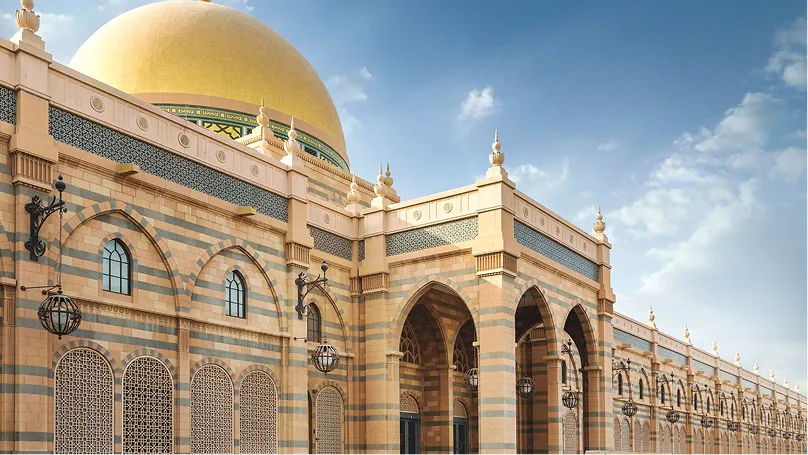
Before the museum opened in 1997, most people had no idea that humans lived in this part of the Gulf more than 125,000 years ago. But decades of excavations – early foreign missions in the 1970s, then Sharjah’s own archaeological team from the 1990s onward – revealed settlements, graves, tools and ornaments that pushed the emirate’s history far deeper than anyone expected. The museum became the first in the UAE dedicated entirely to archaeology, and the first to gather all these discoveries under one roof.
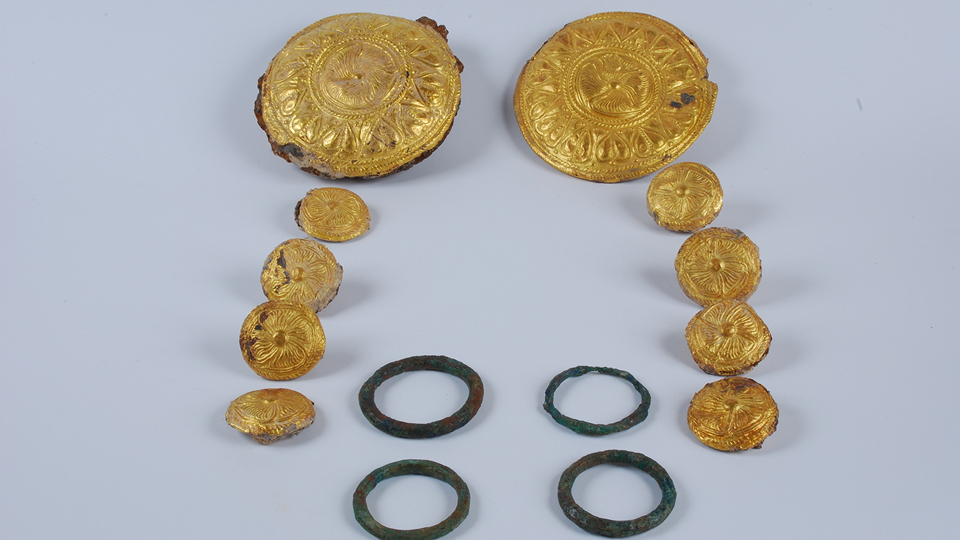
The earliest sections show flint tools and personal ornaments from the Stone Age, including a seven-thousand-year-old pearl necklace from Jebel Buhais – the oldest found in the UAE. Nearby, pottery shards from the Ubaid civilisation in southern Iraq hint at trade routes that stretched hundreds of kilometers long before cities existed on this coast.
As you move forward, metal begins to replace stone. Sharjah’s Bronze Age galleries display pottery, jewellery, seals and beautifully carved ivory combs found in settlements like Tell Abraq. The objects tell a story of a region already connected: copper mined in the mountains here was traded to places as far as the Indus Valley in the east and the Mediterranean islands in the west. What could look like fragments in a glass case instead becomes proof of a world in motion.
.jpg)
Some of the museum’s most meaningful pieces took a far longer journey. Excavated decades ago in areas like Mleiha, they eventually drifted into private collections or appeared at auctions in Europe. When the ruler of Sharjah, H.H. Dr. Sheikh Sultan bin Muhammad Al-Qasimi, learned they were being sold abroad, he bought them back to return them to Sharjah. Many of those rescued items now sit in the Arabian Peninsula Grand Hall section, turning what could have been a story of loss into one of preservation.
Throughout the museum, the story turns toward the people who lived in these early settlements. Models of houses, tombs and burial sites outline how they built their homes and cared for their communities. Skeletons carry traces of rituals that endured for millennia. Early inscriptions mark the moment when spoken stories began taking written form. The result is a portrait of Sharjah shaped by skilled hands, steady trade routes and memories passed from one generation to the next.
.jpg)
In 2022, the museum introduced the Little Archaeologist Hall, the UAE’s first interactive archaeology space for children. Its hands-on displays explore early hunting, building, tool-making, and the region’s earliest art. The hall mirrors the museum’s broader aim: helping visitors of all ages picture the world beneath modern Sharjah. For the next generation, it’s the joy of recognising where they come from – not later in life, but through those first museum visits that spark lifelong curiosity.

.svg)



.jpg)

.jpg)
.jpg)









.jpg)


.jpg)



.webp)




.webp)








.webp)


.webp)


.webp)

_11zon.jpeg)
.jpg)
.jpeg)
.webp)

.jpg)


.webp)



.webp)

.webp)








.webp)
.webp)
%20(2).webp)
.webp)
.webp)
.webp)

.webp)

.png)
.png)
