
The case size – 36.5 mm by 8.43 mm – is modest on paper, but that’s precisely why it works. It’s proportioned like the perpetual calendars that shaped the brand’s identity in the 20th century, not the oversized interpretations that became fashionable later. Two versions, in pink gold and white gold, mark the first time Vacheron has offered a non-gem-set Traditionnelle in this smaller size, while a diamond-set white-gold model adds a discreet touch of formality. Nothing feels exaggerated, nothing pushed for effect; everything sits comfortably within the brand’s own design language.
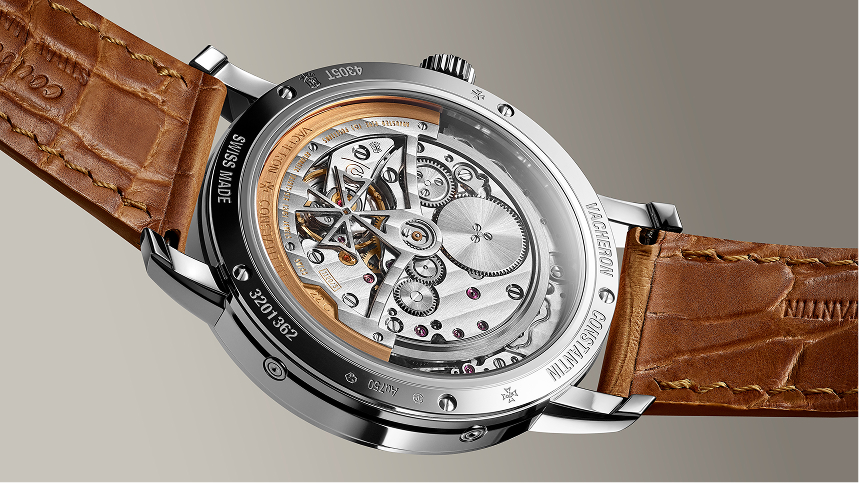
Inside beats Calibre 1120 QP, one of those movements collectors know by personality as much as by number. Ultra-thin, self-winding and quietly complex, it handles the irregularities of the Gregorian calendar – leap years included – and will do so without human intervention until 2100. At 4.05 mm thick with 276 components, it’s the sort of engineering that looks effortless because of how much work went into making it so. The finishing follows the expected brand’s philosophy: the parts you can’t see are finished anyway, because that’s simply how things are done. Under the sapphire caseback, the Côtes de Genève, anglage and the open-worked oscillating weight in the shape of the Maltese cross seem fully aware that you’ll end up staring at them for hours.

What stands out in these models is the balance between technical ambition and visual restraint. The silver-toned opaline dial keeps everything clean and legible, with three perfectly aligned sub-registers and a moonphase at six o’clock that anchors the layout. The pink-gold version leans into tonal harmony, pairing case and hands with a deep blue moonphase and strap, while the white-gold model keeps things subtler with pink-gold accents and a lighter blue lunar disc. The diamond-set edition adds sparkle without tipping into excess: the gems stay on the bezel, lugs and crown, echoing the dial’s cool silvery sheen rather than competing with it.

.svg)



.jpg)


%20(1).jpg)

.jpg)
.jpg)








.jpg)


.jpg)



.webp)




.webp)










.webp)



.webp)



.webp)


_11zon.jpeg)
.jpg)
.jpeg)
.webp)

.jpg)


.webp)



.webp)
.webp)









.webp)
.webp)
%20(2).webp)
.webp)
.webp)
.webp)

.webp)


.png)
.png)
